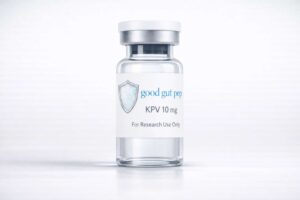


Larazotide for leaky gut has gained interest because of its role in research on intestinal barrier function. It has been investigated to determine whether it may impact the intestinal wall and zonulin protein.
Larazotide is also referred to as AT-1001 and larazotide acetate. Larazotide has been mostly investigated in relation to celiac disease and gluten-induced intestinal mucosa damage.
In contrast to many peptides that have been studied exclusively in animal studies, larazotide has been investigated in human trials as well. This makes it an important substance in the study of protection of the gut lining.
Larazotide is a synthetic peptide with the alternative names AT-1001 or larazotide acetate. This drug was investigated regarding its potential impact on the intestinal barrier function. The interest arose due to the association of this peptide with the protein zonulin involved in controlling intercellular transport in the intestinal lining. Such researches were carried out primarily in relation to celiac disease and associated with increased intestinal permeability disorders. Larazotide is commonly referred to as a zonulin inhibitor.
The intestine is lined with epithelial cells, which are linked together using structures called tight junctions. The tight junctions regulate the passage of materials from one cell to another. Zonulin plays an important role in regulating the passage and therefore can affect intestinal permeability. Any alteration in the gut barrier makes it easy for other materials to pass through.
Larazotide has been studied for its possible effects on the pathways that regulate tight junctions in the gut lining. Researchers have explored whether it can help support the intestinal barrier, especially in people with celiac disease. Its possible action on zonulin-related pathways has also made it a focus of clinical research.
Celiac disease is an autoimmune condition resulting from gluten intake among individuals with a genetic disposition. Gluten may damage the small intestine and the intestinal barrier as well. Larazotide has been extensively studied for its potential as a supplementary therapy for individuals with celiac disease. Clinical trials have explored its ability to help support the intestinal barrier and reduce the effects of accidental gluten exposure, with several studies reporting encouraging findings. As research continues to advance, Larazotide remains a promising peptide with growing interest for its potential role alongside a gluten-free diet, which continues to be the foundation of celiac disease management.
Larazotide for leaky gut is being researched because of its possible effects on intestinal barrier function. The compound may influence pathways involved in how substances move through the gut lining. Larazotide has attracted significant interest for its potential to support intestinal barrier function and promote gut health. While much of the research has focused on celiac disease, its unique mechanism of action has sparked broader scientific interest in applications related to intestinal permeability and digestive wellness. As clinical research continues to expand, ongoing studies are expected to provide further insights into Larazotide’s therapeutic potential across a wider range of gut health applications.
Larazotide has been extensively evaluated in clinical studies for its potential to support individuals with celiac disease by helping maintain intestinal barrier integrity and reduce the effects of accidental gluten exposure. Its novel mechanism of action has made it one of the most widely studied peptides in this area, highlighting its promise as a complementary approach to gut health. As research continues to advance, Larazotide remains a peptide of significant scientific interest, with ongoing studies further exploring its therapeutic potential alongside a gluten-free diet, which continues to be the cornerstone of celiac disease management.
Larazotide has progressed further in clinical research than many other peptides discussed in gut health. Studies have examined its safety and possible effects in people with celiac disease. Some trials have reported improvements in certain symptoms and measures of gut function. Clinical research on Larazotide has generated encouraging findings and contributed significantly to our understanding of intestinal barrier function and gut health. Its unique mechanism of action continues to attract considerable scientific interest, with ongoing studies exploring its potential across a range of gastrointestinal applications. As the body of clinical evidence continues to grow, Larazotide remains a promising candidate for supporting intestinal barrier health and advancing future therapeutic strategies.
Larazotide remains an investigational compound. Its research history includes human clinical trials, mainly involving celiac disease. This gives it a different research profile from many peptides that have only been tested in animals or laboratory settings. Researchers still need more evidence on its effectiveness, safety, proper use, and long-term effects. Its regulatory status may also vary between countries, so current information should be checked with relevant health authorities.
Larazotide has emerged as a peptide of growing scientific interest due to its potential to support “leaky gut” and digestive health. Ongoing clinical research continues to expand our understanding of its mechanisms of action and potential therapeutic applications. As interest in Larazotide increases, selecting high-quality products from reputable suppliers is essential to ensure purity, identity, and quality standards. Individuals considering Larazotide should review the available scientific literature and consult a qualified healthcare professional to determine whether it is appropriate for their individual needs.
If you want to support your gut health, The Good Gut Co offers high-quality supplements made with care and attention to detail. The brand focuses on purity, consistency, and clear sourcing. Its products are independently tested by third parties to help ensure quality and give customers greater peace of mind.
The Good Gut Co aims to make choosing gut health supplements simple and clear. From careful sourcing to secure packaging, each step focuses on quality. The brand also provides helpful customer support. Its goal is to help consumers find reliable supplements that fit their gut health and daily wellness needs.